TOWARDS HAB-CONTROLLING TECHNOLOGY:
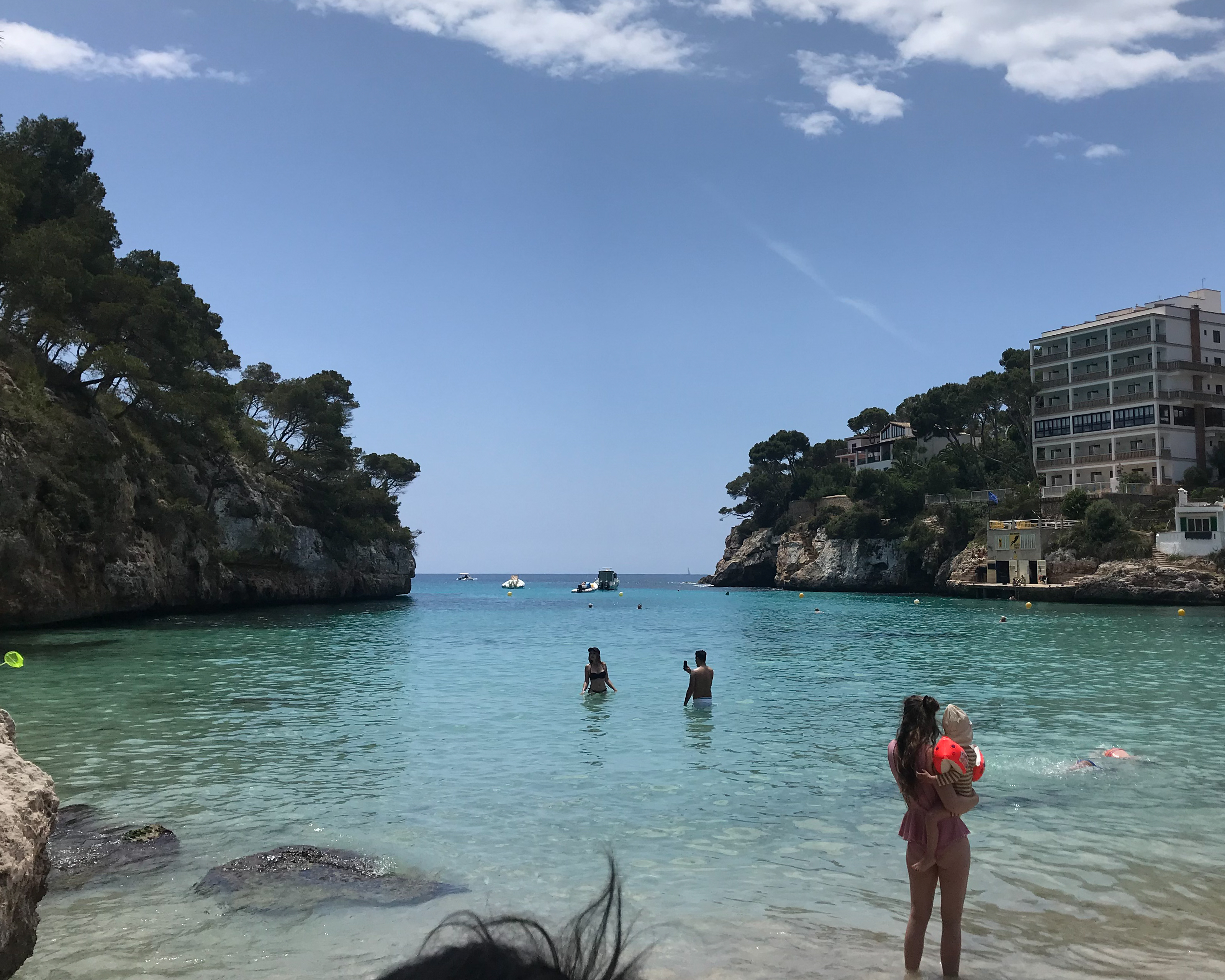
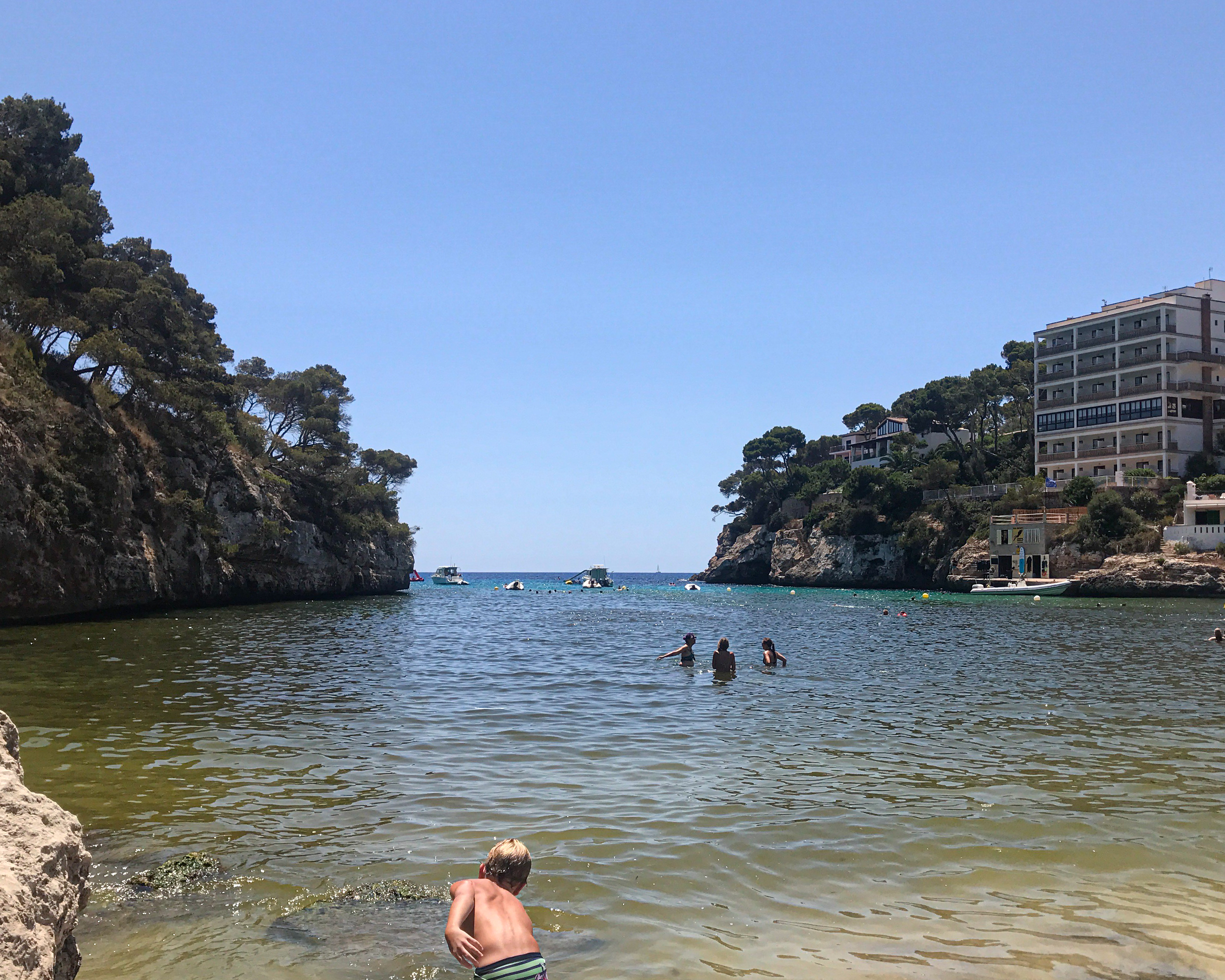
Parasitoid-Dinoflagellate Interactions in Cala Santanyí, Mallorca, Spain
Why Study This?
In the Mediterranean Sea, harmful algal blooms are generally caused by dinoflagellates. Harmful algal blooms have been increasing in frequency throughout the last century. Toxic harmful algal blooms, which cause problems for human health, are of particular concern.
The majority of harmful algal bloom events in the Mediterranean are caused by dinoflagellates. We’re studying the interactions between dinoflagellates and parasitoids at both the population- and individual-scales to better understand the dynamics between these organisms and if we can maybe use parasitoids as a way to control harmful algal blooms in the future.
Parasites and predators are constantly used in agriculture and in terrestrial environments to control pests. Our goal is to see if we can use the same concept of using natural interactions between parasitoids and dinoflagellates to control the marine environment.
What are Harmful Algal Blooms?
Harmful algal blooms (HABs) are events where phytoplankton occur in high abundances and cause ecological or environmental harm, economic harm, or harm to human health. In the Mediterranean, many beaches are key to bringing in tourists and maintaining local economies. While HAB events may not be toxic, they are not pleasant to look at, smell, or swim in, which results in tourists leaving to go to other beaches.
Dinoflagellates
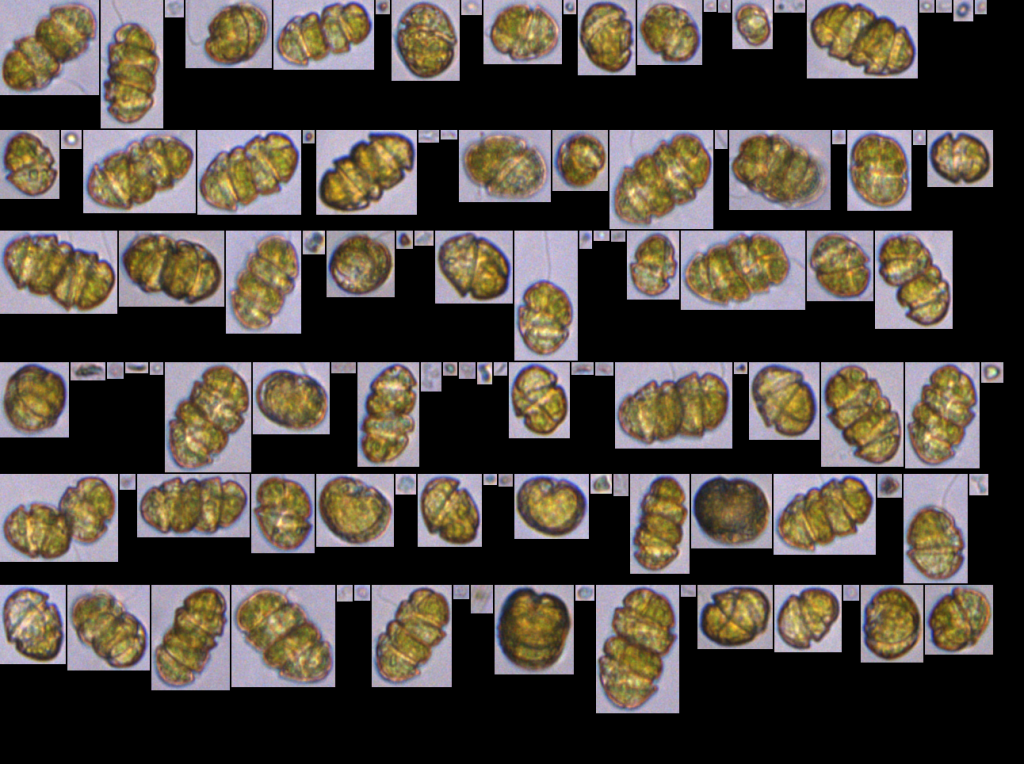
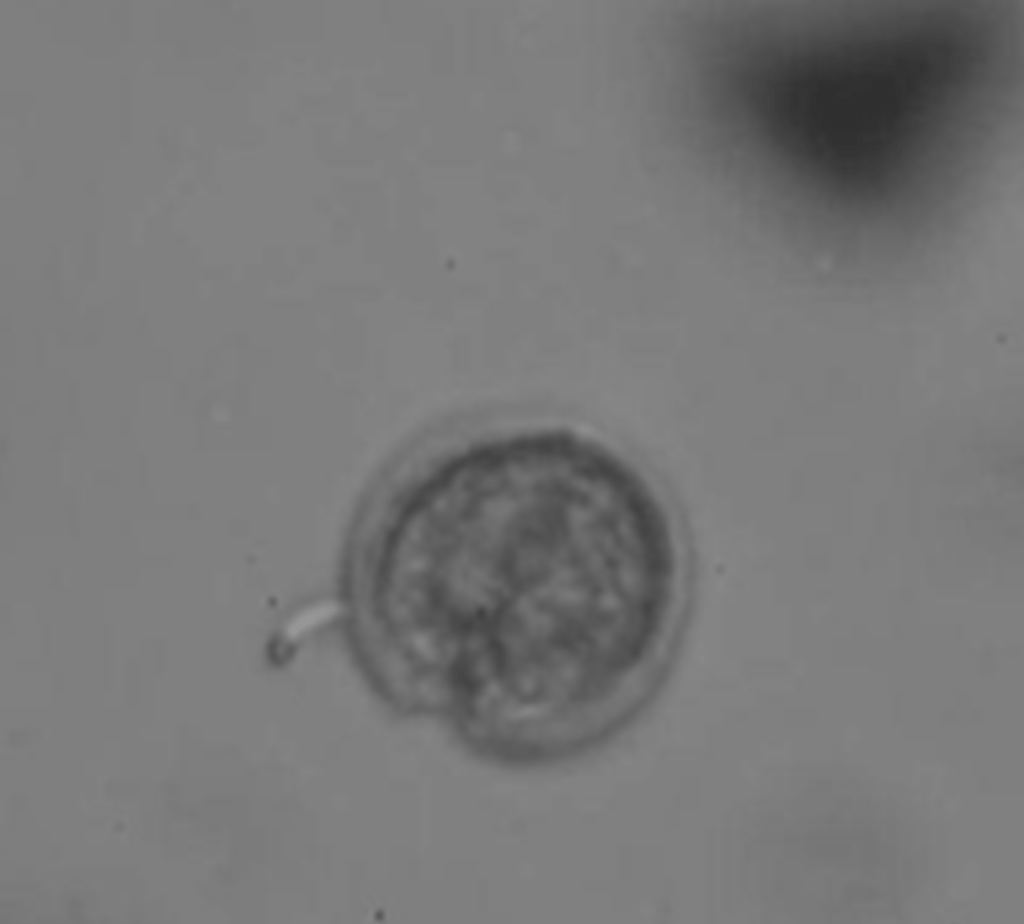
Dinoflagellates are a mix of phytoplankton, or plankton which can use light to make their own food, and microzooplankton, or plankton which need to consume other plankton. What defines them are the two flagella on their cells – one around their body (the transverse flagellum) and the tail.
We’re specifically studying dinoflagellates which are phytoplankton. These are the dinoflagellates responsible for HABs in the Mediterranean.
Over the last two summers, there were three blooms in Cala Santanyí. These blooms were caused by Gymnodinium litoralis, a common dinoflagellate species.
Parasitoids
Parasitoids are a type of parasite where, as part of their life cycle, they kill their host.
The parasitoids that we’re studying belong to the genus Parviluciferae. These parasitoids work by individual zooids, the infective stage of the parasitoids, boring into the dinoflagellates. They then consume the insides of the dinoflagellate before producing sporangium, or the reproductive phase of the parasitoids. The zooid then reproduces inside the sporangium. When a sporangium is mature, hundreds of individual zooids are present. When the zooids are awakened by the presence of dinoflagellates, the zooids emerge from the sporangium to infect other dinoflagellates.
This work received funding from the European Union’s Horizon 2020 research and innovation programme under the Marie Skłodowska_Curie Grant Agreement No. 896043

